Framework
0 to 1
The Setup
Splunk's data ingestion was fragmented across 100+ products built over 10 years — each with its own onboarding, settings, and monitoring. Customers needed days to weeks just to connect their first data source, often requiring multiple roles and constant context-switching between docs and support. The 2020 "Cloud First Hybrid" strategy aimed to unify everything under one control plane, but the real challenge was making it actually work for customers.
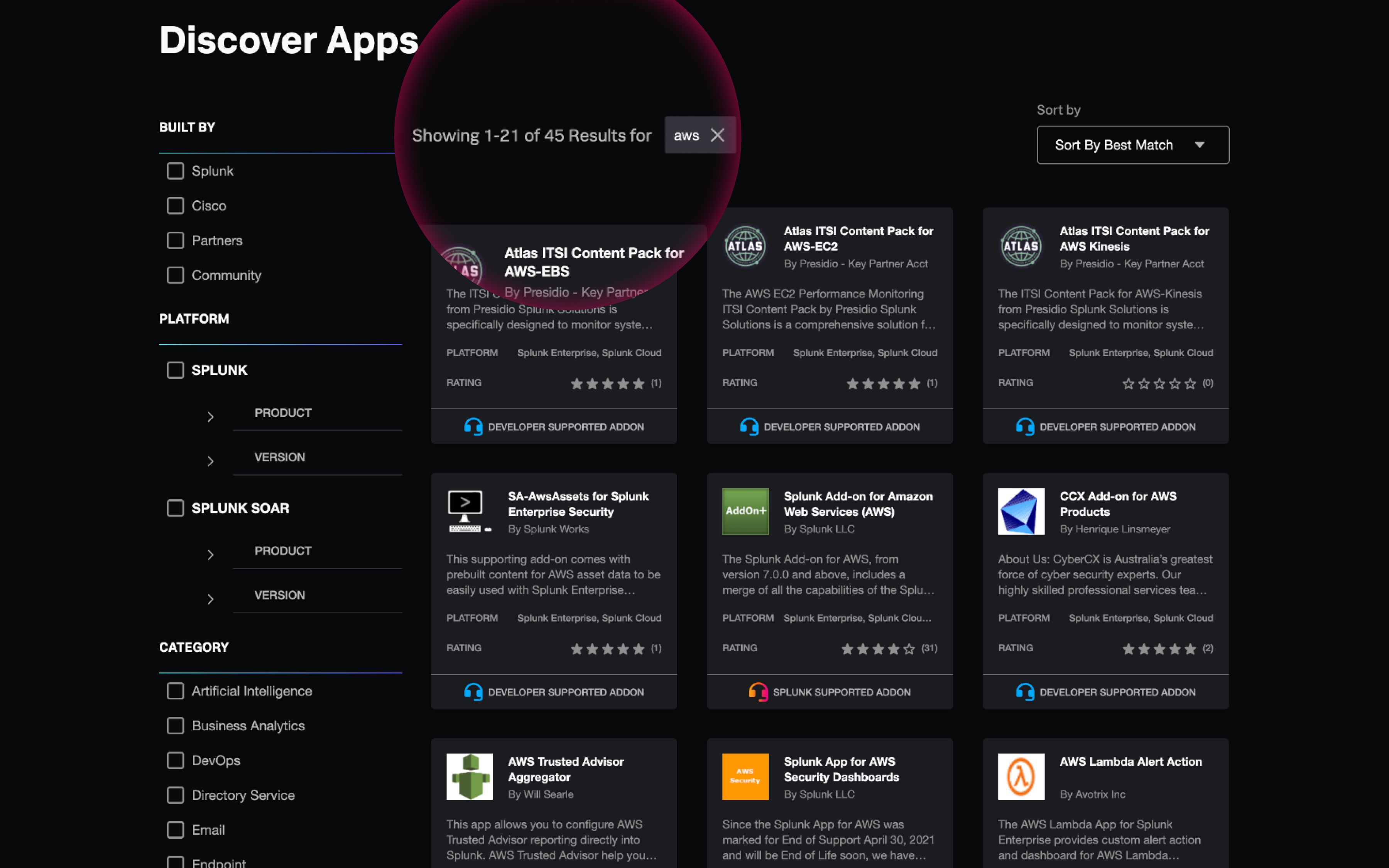
Discovery problem: 45+ AWS tools, but which one fits my use case?
The Challenge
Create one consistent experience across 1,000+ data sources, multiple cloud providers (AWS, Azure, GCP), and varying use cases — without forcing customers into a rigid, one-size-fits-all flow.
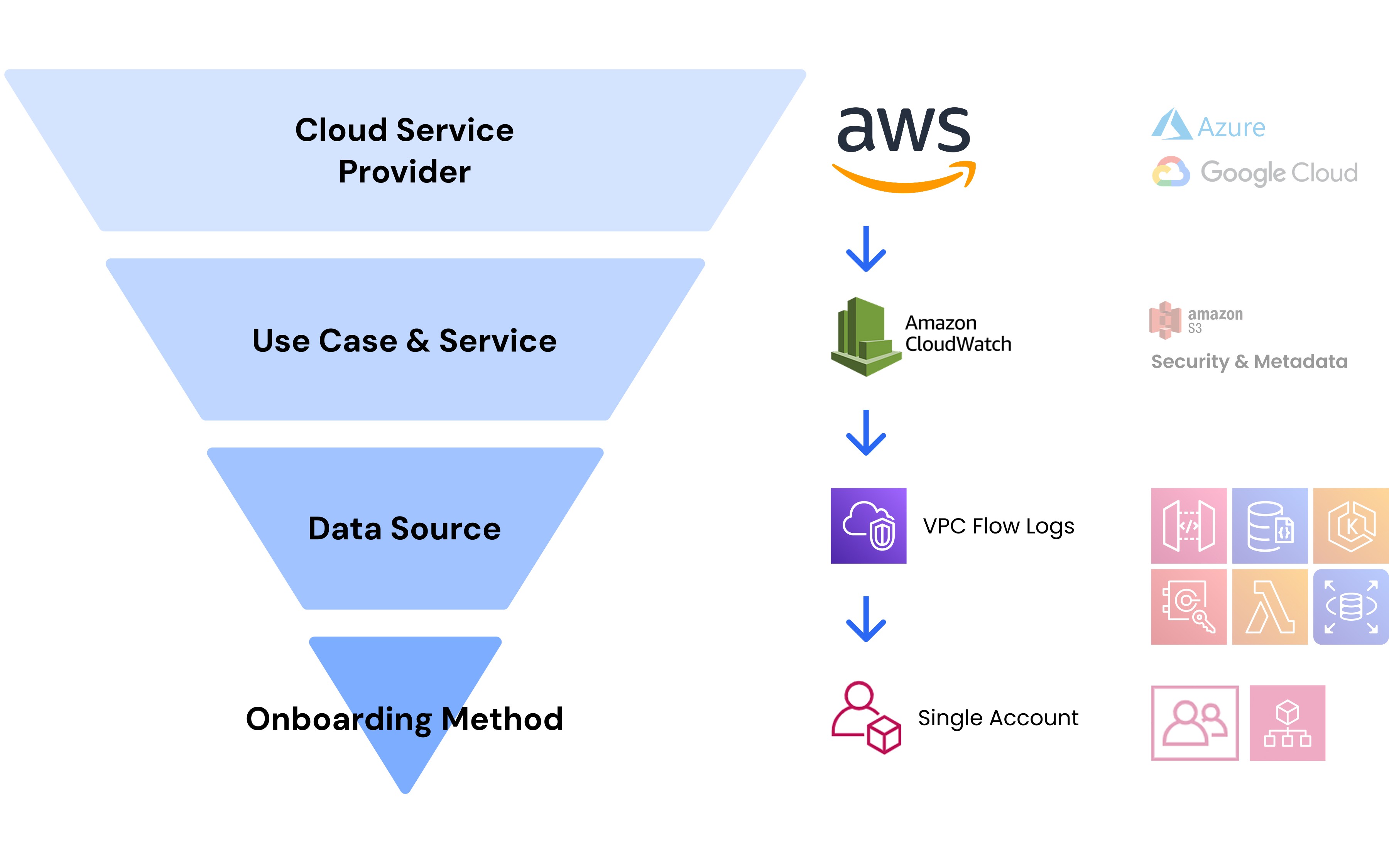
Target scope: 1000+ data sources across AWS, Azure, GCP, and other cloud service providers
Our Approach
Framework-first thinking
Defined a consistent journey principle upfront, inspired by smart home onboarding patterns. Built a component library to standardize forms and metadata across all data sources, ensuring designers could work independently without creating drift.
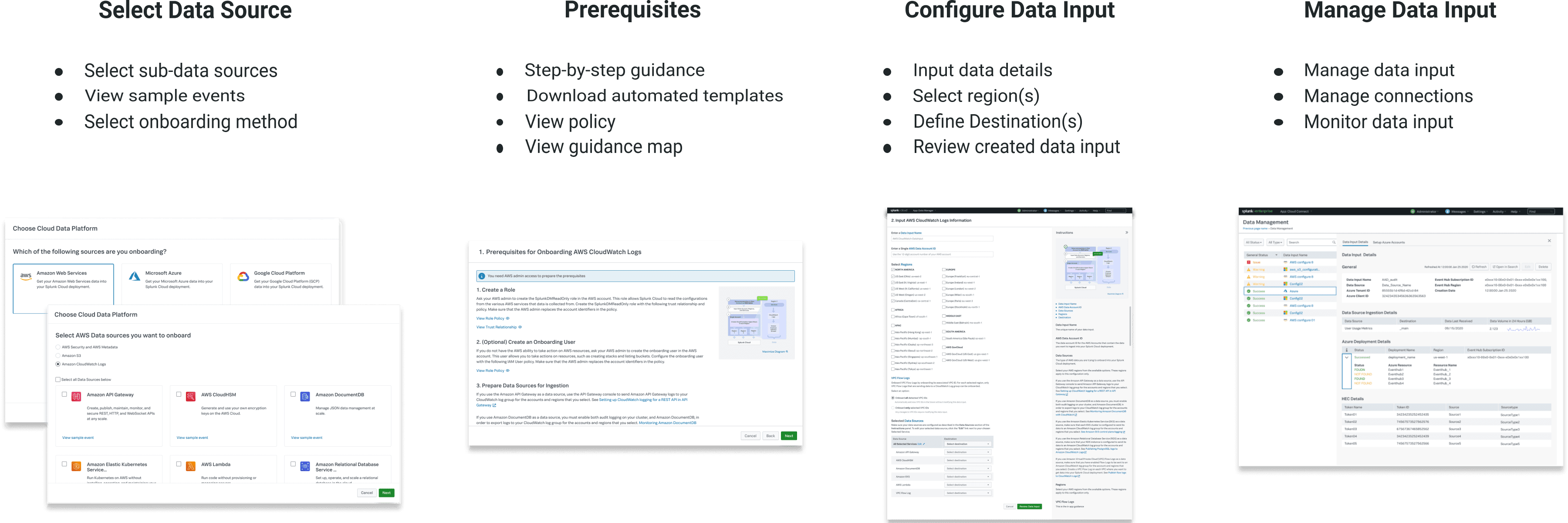
Framework-first design: Consistent journey structure scales across all variations
In-app guidance
Reduced external handoffs by embedding setup instructions and email collaboration directly in the product. No more jumping between documentation, support tickets, and the UI.
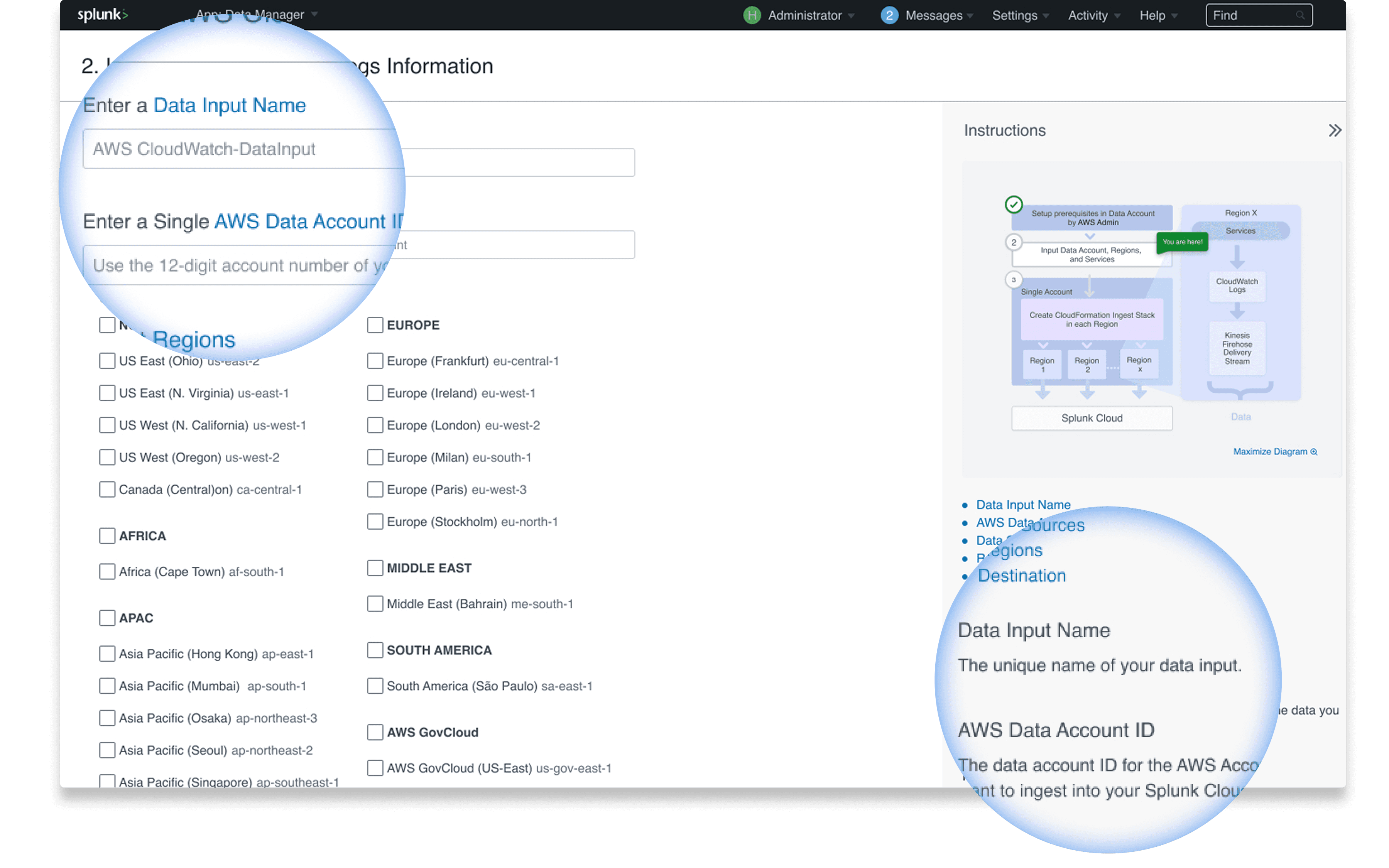
In-app guidance: Contextual help eliminates back-and-forth with documentation
Atomic design system
Worked with engineering to align on reusable components, enabling rapid scaling to new data sources. CrowdStrike integration took 1.5 months vs. previous 6+ month cycles.
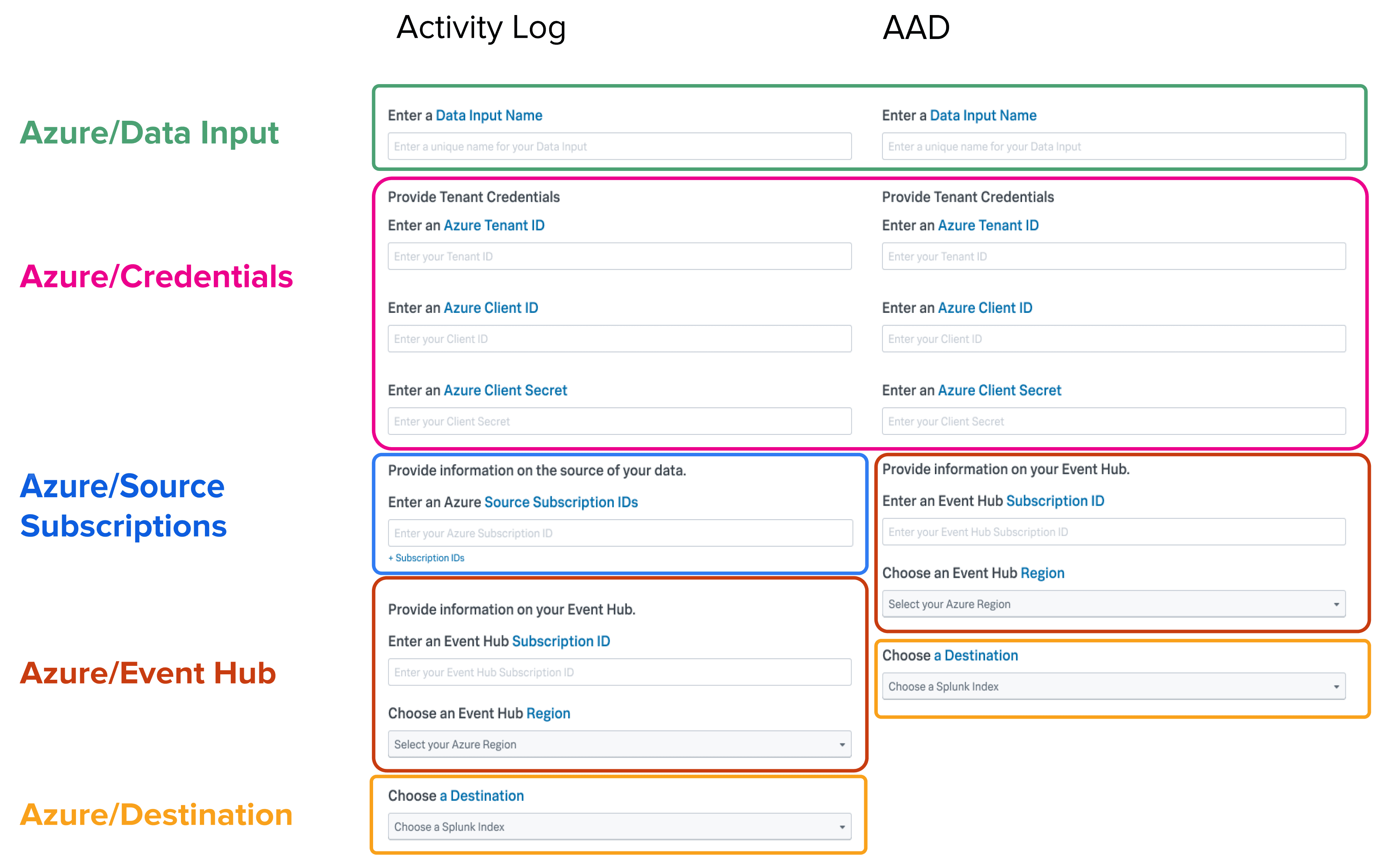
Component library: Standardized form elements ensure consistency across all data sources
Impact
Splunk Cloud Data Manager launched with 400+ customers creating 1,000+ data inputs. Setup time dropped from days to an average of 13 minutes. The framework enabled CrowdStrike integration in 1.5 months — a 4x velocity improvement over previous integrations.
Weekly Active Users
400+
Average Setup Time
13 min
Daily Active Pipelines
61%
Time to new integration
6 wks
What I learned
Sequential planning kills velocity. Weekly design audits and a shared component library kept the team aligned as we scaled to dozens of data sources. The real unlock wasn't perfecting one flow — it was building a system that let multiple designers contribute without breaking consistency.